


Today, the down jacket has become an important part of our wardrobe. As soon as temperatures drop, the down jacket becomes indispensable, even in the mid-season. Highly valued for its functionality and its fashionable side, this garment has enjoyed remarkable success.
This winter jacket has evolved from a simple utilitarian garment designed to protect against the cold into an iconic city piece, appreciated by all, including fashion designers. The history of the down jacket is a blend of functionality, innovation and cultural transformation, illustrating the interconnection between fashion and utility. Here are the key stages that took the down jacket from a mountain garment to an urban essential.
1. From humble origins to a fashion-forward piece
There are different accounts of the birth of the first down jacket.
Officially, the origin of the down jacket dates back to Eddie Bauer, who was the first to file a patent for such a product. After nearly suffering hypothermia during a fishing trip in freezing temperatures, the American aviator developed a technique for distributing down across the entire jacket, providing unparalleled insulation against the cold.
It turns out that other mountaineering enthusiasts before him may have been the originators of the famous winter jacket. During the 1922 British Everest expedition, Australian George Finch tested a prototype jacket filled with natural down, while the other members of the expedition wore tweed jackets.
George Finch was the only one not to suffer from the low temperatures. We should also mention the Frenchman Pierre Alain: his passion for the mountains led him to produce and sell down jackets in his shop in Paris between 1931 and 1964. His jackets were primarily intended for mountaineering and winter sports.
In the 1940s, Klaus Obermeyer also had the idea of cutting up a duvet filled with natural down and turning it into a quilted jacket, warmer than anything available at the time. These innovations laid the foundations for the modern down jacket, a garment capable of withstanding the harshest elements. From the 1950s onwards, the down jacket was first adopted by the air force, fishermen and hunters, and then gradually by winter sports athletes in the years that followed.
Thanks to its highly insulating properties and freedom of movement, this garment became a must for mountaineers and winter sports enthusiasts ready to face extreme conditions.
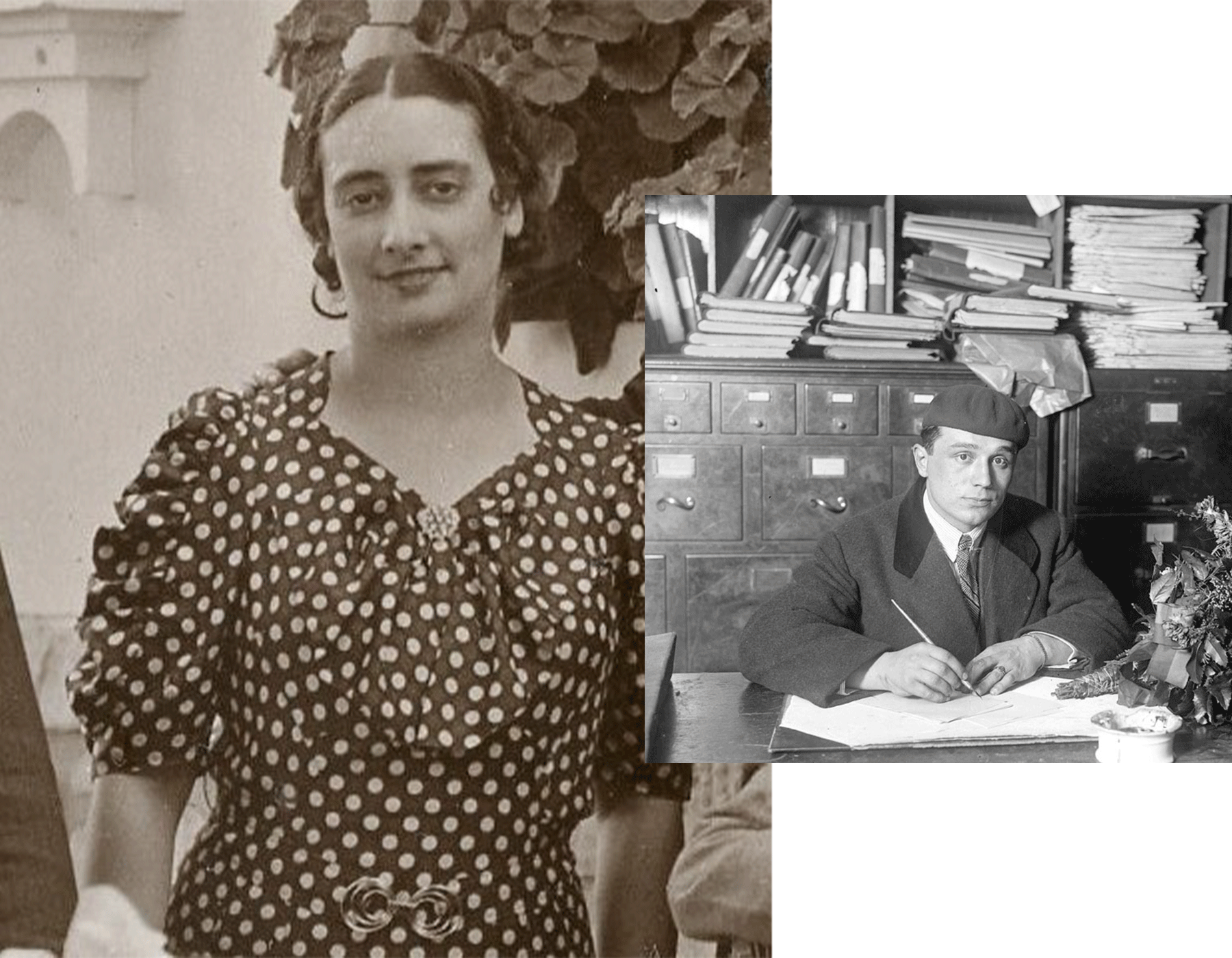
However, Pyrenex had the idea for this type of jacket as early as the 1940s. Marie Crabos, wife of René, who was then at the head of the company, designed and made the first "solidarity" down jackets for humanitarian purposes: to protect prisoners of war from the Landes region in the village of Saint-Sever from the cold. The down jackets were sent to Germany via the Red Cross.
It was in the 1970s that Pyrenex truly embarked on the manufacture of its first technical winter mountain jackets, filled with natural duck down and feathers, including jackets and outfits to accompany one of the pioneers of modern mountaineering, Louis Audoubert, on his expeditions deep into the Himalayas. Subsequently, Pyrenex down jackets distinguished themselves through their unrivalled performance in terms of insulation and lightness. During the following decade, the Authentic Jacket, the brand's iconic product embodying the full DNA and expertise of Pyrenex, took on an increasingly prominent place in the range.
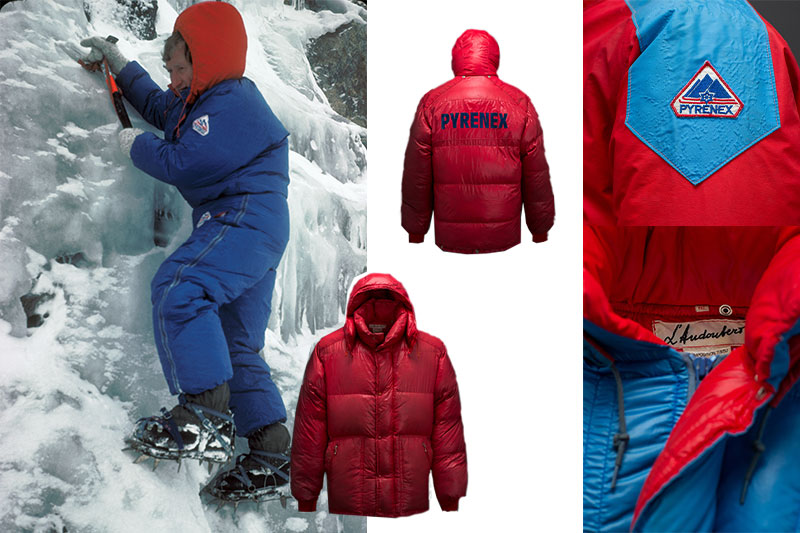
It was in the 1970s that Pyrenex truly embarked on the manufacture of its first technical winter mountain jackets, filled with natural duck down and feathers, including jackets and outfits to accompany one of the pioneers of modern mountaineering, Louis Audoubert, on his expeditions deep into the Himalayas. Subsequently, Pyrenex down jackets distinguished themselves through their unrivalled performance in terms of insulation and lightness. During the following decade, the Authentic Jacket, the brand's iconic product embodying the full DNA and expertise of Pyrenex, took on an increasingly prominent place in the range.
2.The winter jacket as a cultural symbol
Adopted by major brands and fashion houses, as well as by celebrities, the down jacket enjoyed genuine popularity in urban settings during the 1980s, rapidly and positively evolving in the public consciousness. Their contribution made it possible to combine functionality, fashion and comfort in a single garment. From a simple technical mountain garment, the winter jacket became an indispensable fashion accessory now worn in the city with everyday outfits. Often expensive and high-end, the down jacket quickly became a status symbol among its admirers.
Brands have continually reinvented the jacket with more technical materials and innovative solutions, offering oversized, long or short styles for a variety of looks. The introduction of synthetic materials offering greater moisture resistance and a lighter, more compact design for added practicality has contributed to the rapid evolution of the down jacket.
At Pyrenex, down jackets have followed a similar evolution over the years, moving from the status of an exclusive mountain garment to that of a modern, fashionable piece. In the 2010s, Pyrenex collaborated with two luxury designers: Alexis Mabille and Alexandre Vauthier. The premium collection was entrusted to the two fashion designers, the first in 2008 and the second in 2012, to create original, high-quality and appealing pieces.
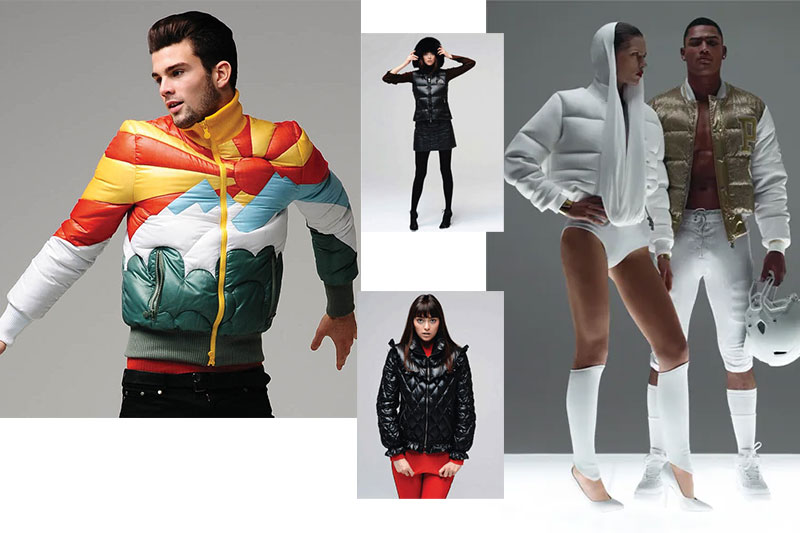
In order to combine comfort and practicality, Pyrenex has since designed jackets that are not only compact, but also water-repellent or waterproof, ensuring protection even in bad weather. In addition, the use of breathable fabrics helps keep the body comfortably dry. The natural down filling provides exceptional insulation and unrivalled lightness. Down jackets have become a way for everyone to express themselves and assert their style. The efforts made to make down jackets more accessible in terms of price and style have broadened their audience and integrated them into our everyday wardrobe. At the same time, the evolution of the down jacket has encountered some controversy along the way. The fashion industry has faced environmental protection issues, which has necessitated a shift towards more sustainable and environmentally responsible manufacturing.
3.Pyrenex: an eco-responsible approach
Pyrenex's expertise rests on a simple principle: upcycling. This involves recovering a natural organic material considered a by-product — feathers and down from the agri-food industry in south-west France — and transforming it into a noble filling that is 100% biodegradable, unlike synthetic fillings derived from petroleum, which are 10 times more harmful to the environment.
DISCOVER OUR ECOLOGICAL APPROACH
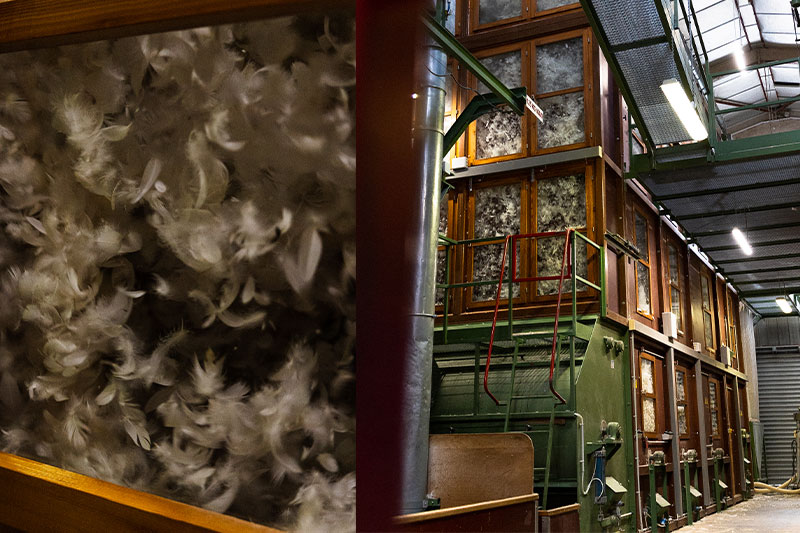
Pyrenex down is meticulously selected and comes exclusively from the finest goose and duck farms in southern France, in Aquitaine. The feathers and down are tested to guarantee the best performance, then sorted, cleaned, de-dusted, dried and sterilised by our teams. Various certifications attest to our commitment to more responsible production. Eco-design also aims to optimise the environmental impact of our products at different levels. Whether it is developing an environmental analysis tool to optimise design choices, participating in a national working group on environmental labelling, innovating in processes or making efforts to reduce our energy, water and packaging consumption, we are constantly committed to improving our ecological footprint.
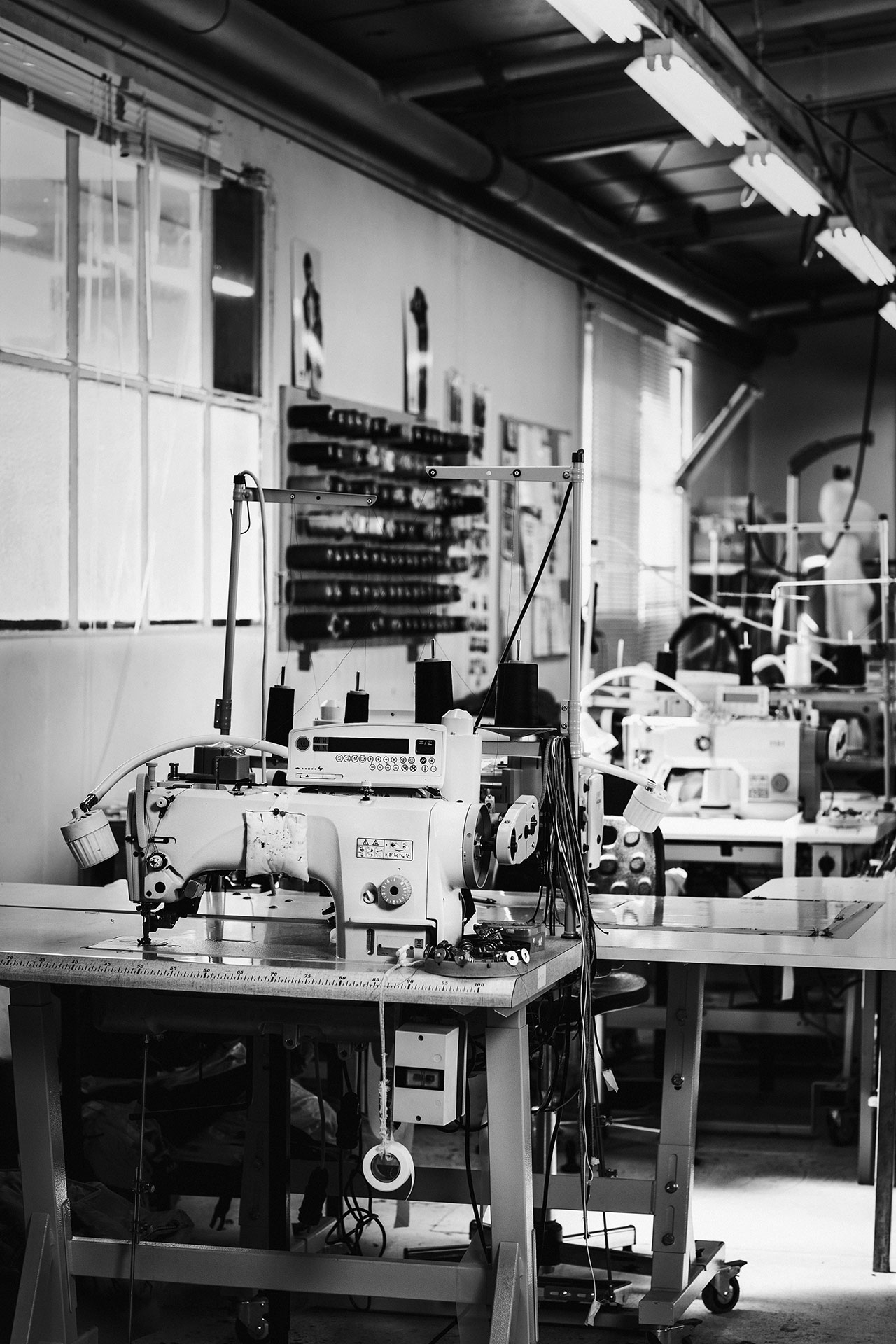
The evolution of the down jacket reflects the transformation of a technical garment into a versatile fashion icon. From humble origins, the down jacket has today become a fashion item that has found its place in our wardrobes.
DISCOVER OUR WINTER JACKET


